
Plate vs. Shell & Tube Heat Exchangers: Which is the Best for Hygienic Processing
When engineers compare plate heat exchangers (PHEs) and shell-and-tube heat exchangers, the discussion often centers on generalizations.
- Plate heat exchangers are more efficient.
- Shell-and-tube units are rated for high pressure.
- Plate heat exchangers are compact.
- Shell-and-tube designs better accommodate viscous fluids.
While these observations hold true in general, fully informed selection requires deeper consideration of application-specific details. Selecting between exchanger types in hygienic processing depends on several operational realities.
In real-world hygienic processing environments, the best choice depends on more than thermal performance alone. Pressure drop, cleanability, maintenance requirements, facility footprint, and total cost of ownership all play a role in determining which technology is the better fit for the application.
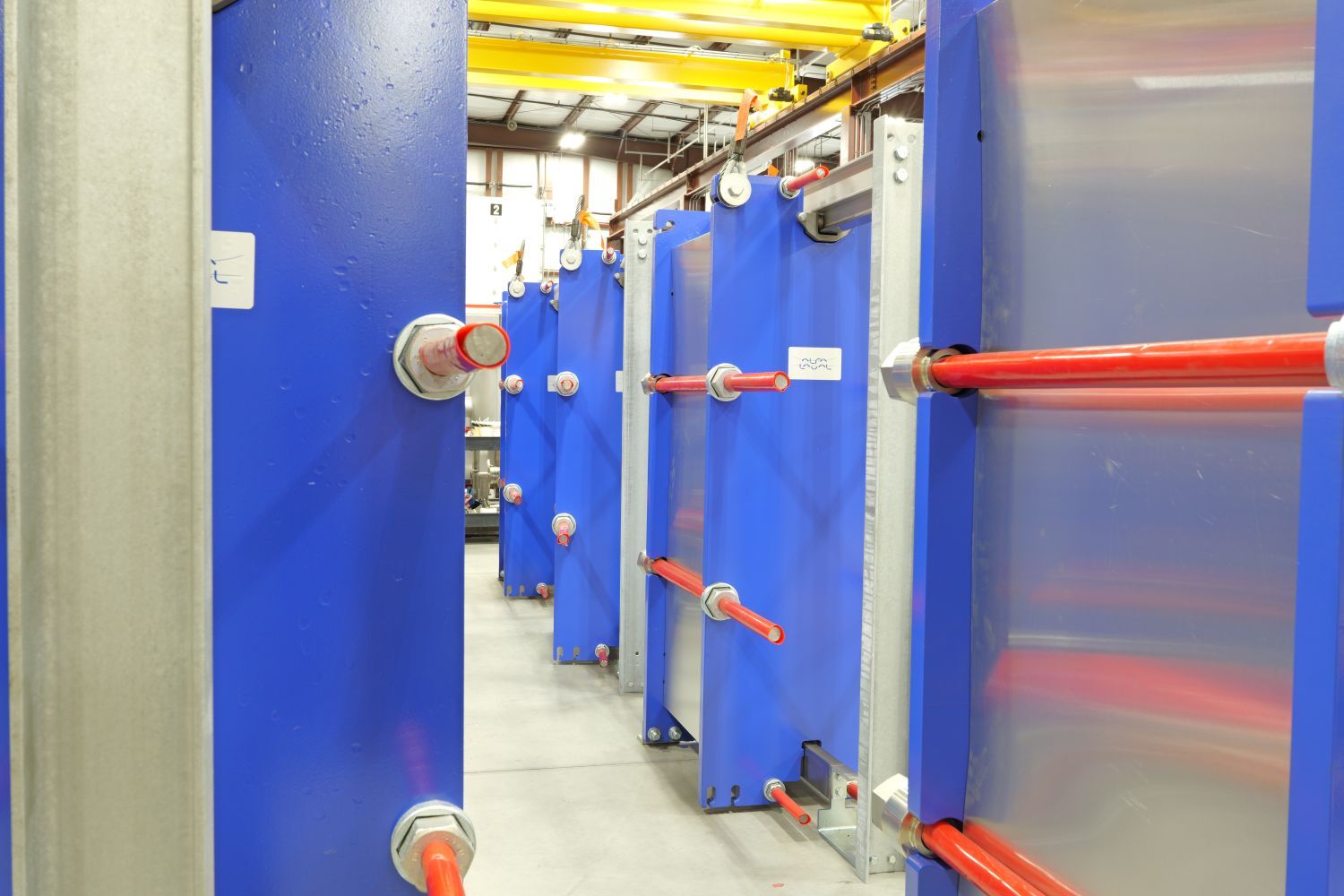
Plate vs Shell & Tube Heat Exchanger Comparison Table
Factor |
Plate Heat Exchanger (PHE) |
Shell & Tube Heat Exchanger |
| Heat Transfer Efficiency | Excellent | Moderate |
| Footprint | Compact | Larger |
| Pressure Drop | Higher | Lower |
| CIP Performance | Excellent | Good |
| Visual Inspection | Full access to plates | Limited access to tubes |
| Maintenance | Plates and gaskets serviceable | Tube cleaning can be difficult |
| Best For | Dairy, beverage, hygienic processing | High pressure, viscous products, utility service |
| Typical Cost of Ownership | Lower over time | Can increase due to fouling and maintenance |
Plate Heat Exchanger vs. Shell & Tube: Which Is Better?
For most dairy, beverage, food processing, and hygienic applications, a plate heat exchanger is usually the better choice because it delivers:
- Higher heat transfer efficiency
- Better CIP performance
- Smaller footprint
- Easier inspection and maintenance
- Lower utility consumption
A shell & tube heat exchanger may be the better choice when the application involves:
- Very high pressures
- Extremely viscous products
- Large particulates
- Frequent high-temperature sterilization
- Certain pharmaceutical water systems
The best heat exchanger depends on product characteristics, cleaning requirements, pressure limitations, and long-term operating costs.
Pressure Drop: Where Theory Meets Reality
Pressure drop is often the most critical—and misinterpreted—consideration in heat exchanger selection.
Why Plate Heat Exchangers Usually Have Higher Pressure Drop
Plate heat exchangers are designed with corrugated plates that create intense turbulence. That turbulence dramatically improves heat transfer, but it also increases frictional losses.
Shell-and-tube heat exchangers generally produce lower pressure drop, but they require significantly more surface area to achieve the same thermal performance. If a shell-and-tube heat exchanger is determined to be the optimal equipment for a given process, these limitations are accepted and accommodated in the overall system design.
“Many times, pressure drop through a heat exchanger is viewed as an inconvenience or afterthought. Engineers come looking for a plate heat exchanger with little to no pressure drop, they can add to an already-designed system. This is impossible and leads to sub-optimal heat exchanger design. ”
— Ryan Frank, Product Manager – Heat Exchangers, CSI
Common Pressure Drop Design Mistakes
One of the most common issues CSI encounters is when the pressure drop is overlooked during system design.
When this happens, engineers may face:
- Undersized pumps
- Inability to meet temperature targets
- Significantly higher equipment costs
- Compromised process reliability
Impact on Pump Sizing and Energy Costs
Heat exchanger selection directly affects:
- Pump horsepower requirements
- Electrical consumption
- NPSH margins
- Long-term operating costs
The optimal design balances thermal performance and hydraulic efficiency across the entire system.
When Higher Pressure Drop Is Worth It
A moderate pressure drop is often a worthwhile trade-off when it delivers:
- Smaller equipment footprint
- Lower capital cost
- Better heat transfer efficiency
- Improved CIP performance
- Reduced utility consumption
In many hygienic applications, a pressure drop of 8 to 12 psi is a practical design target.
Cleaning Labor and Downtime: Operational Reality
How Long Does It Take to Open and Clean a Plate Heat Exchanger?
Cleanability is a critical differentiator in hygienic processing. Opening a plate heat exchanger (PHE) can take anywhere from several hours to several days. The answer depends on the unit's size and configuration.
Larger units may require:
- Hydraulic tightening tools
- Specialized wrenches
- Additional technicians
- More maintenance planning
Experience, expertise, equipment, and manpower can make the difference between a short, easy job and a long, difficult one.
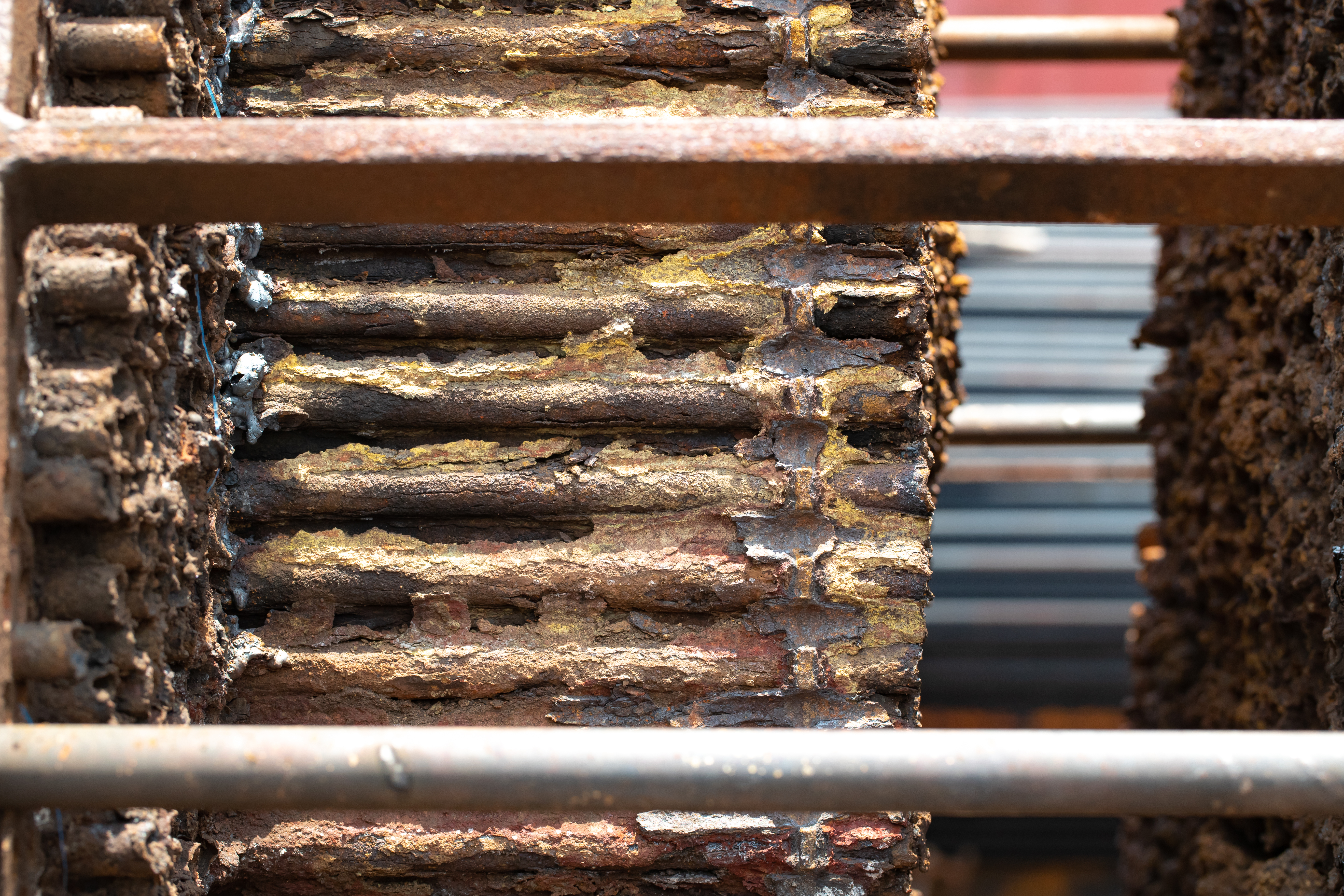
Plate vs. Shell & Tube Cleaning in Practice
Plate heat exchangers offer a major advantage: they can be fully opened for visual inspection.
Shell & tube exchangers can sometimes be disassembled, but many are not designed for frequent inspection.
When Manual Cleaning Becomes Unavoidable
Manual cleaning may be necessary when:
- CIP fails to restore performance
- Product fouling is severe
- Gasket leaks develop
- Cross-contamination is suspected
- Regulatory inspection requires visual verification
Which Design Causes More Unplanned Downtime?
In hygienic applications where fouling is likely, shell & tube exchangers often cause more downtime because deposits inside tubes may be difficult or impossible to remove mechanically.
When a PHE fouls, operators can usually open the frame, inspect the plates, and restore the unit to full functionality.
Why Plate Heat Exchangers Excel in Milk Processing
The compact and efficient design of PHEs allows for several demanding duties to be fit in the same frame:
- Pasteurization requires heating, cooling, and regeneration steps.
- PHEs allow for the separation and individual processing of cream and skim streams.
- Fitting these processes into one unit reduces floor space and piping requirements.
PHEs have excellent characteristics for cleanability and achieving hygienic requirements:
- Milk contains proteins, lipids, and sugars that all contribute to fouling concerns.
- Hygienic PHEs are specifically designed to maximize the effectiveness of CIP processes.
- Sanitation and cleanliness can be visually verified by opening the units.
- Auto-opening units for processes require frequent 3rd-party verification and audits.
Footprint and Installation Considerations
- Why Plate Heat Exchangers Win on Footprint
-
Their high heat transfer coefficients allow them to achieve large duties in compact footprints.
- Are Shell & Tube Units Easier to Retrofit?
-
- This is often a misconception.
- Shell & tube units are typically larger and heavier than PHEs performing the same duty.
- The one caveat: PHEs require maintenance clearance.
- Maintenance Access Requirements
-
Without adequate access, the serviceability advantages of a PHE are lost.
- Piping Layout Advantages
-
- PHEs are generally easier to pipe.
- In many applications, all four connections are located on the fixed frame plate, simplifying layout and reducing installation complexity.
- Shell-and-tube units often have nozzles distributed at both ends of the exchanger.
When Tubular Designs Become the Better Choice
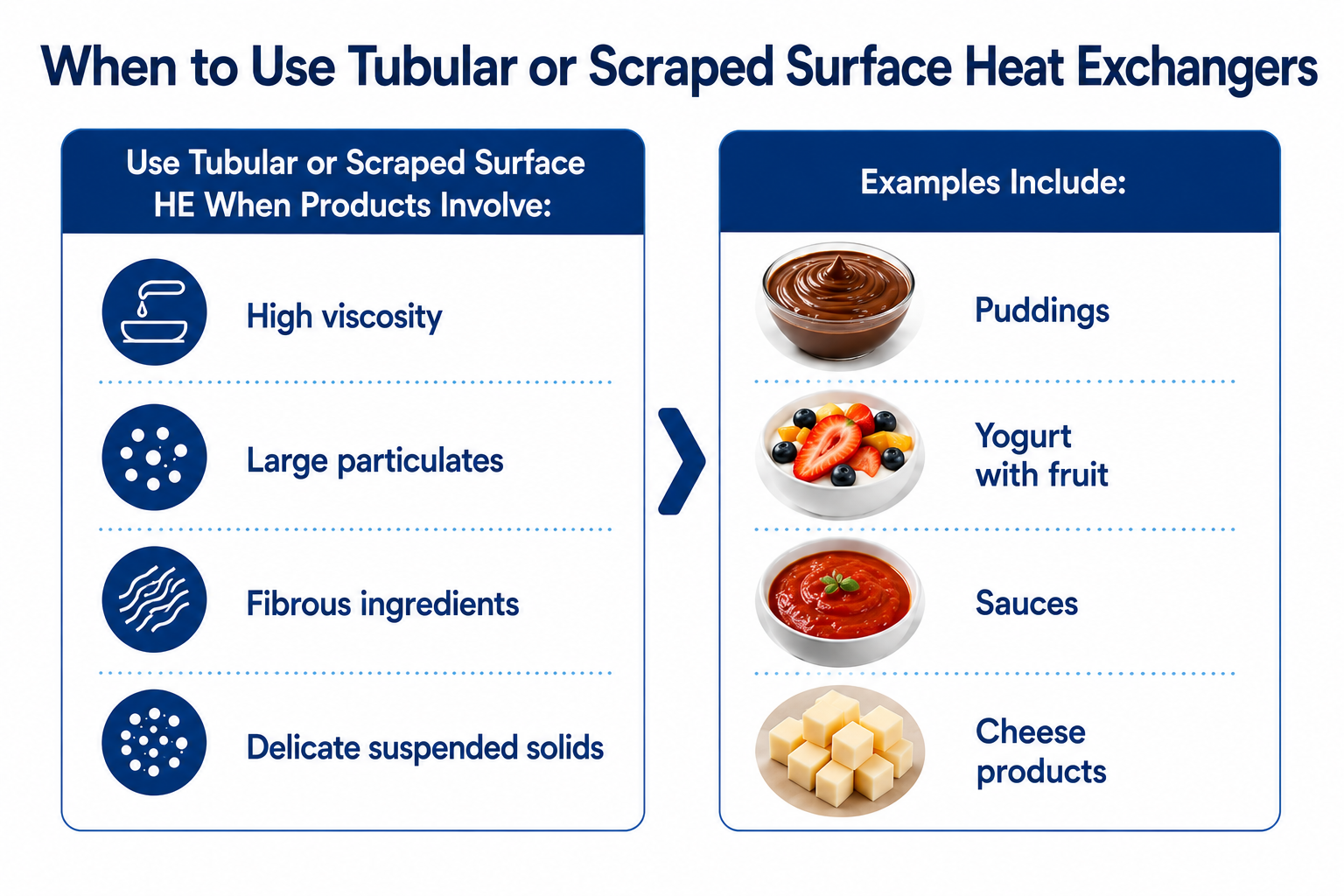
While PHEs are ideal for many products, they are not universal solutions.
Scraped surface units are often used when products are so viscous or heat-sensitive that fouling would rapidly disable a conventional exchanger. Tubular or scraped surface heat exchangers become better options when products involve:
- High viscosity
- Large particulates
- Fibrous ingredients
- Delicate suspended solids
Examples include:
- Puddings
- Yogurt with fruit
- Sauces
- Cheese products
Warning Signs a Plate Heat Exchanger Is Not the Right Fit
When these symptoms appear, a tubular or scraped surface design may be a better fit.
Early indicators include:
- Excessive pressure drop
- Frequent plugging
- Poor product distribution
- Broken particulates
- Rapid fouling
- Inability to meet temperature requirements
Long-Term Cost and Maintenance Realities
The initial purchase price is only part of the equation. Service and maintenance should be factored in.
Maintenance Differences Between Plate and Shell & Tube
Both technologies can be cleaned in place, but PHEs are specifically designed to maximize turbulence and cleaning effectiveness. If there are issues with the CIP or a component fails due to use, the plate pack can be replaced, and the unit returned to its original service duty.
By contrast, shell-and-tube units may gradually lose capacity as tubes foul or become plugged. Plugged and leaking tubes are often closed off and isolated from the rest of the unit. This permanently reduces the unit's performance over time, and there is little to no way to restore it.
Gasket Replacement Over 5–10 Years
Gasket life varies widely. Factors affecting gasket life include:
- Temperature cycling
- Chemical exposure
- Opening frequency
- Over-pressurization
- Control stability
Service Life Expectations
Both designs can deliver long service lives when properly selected and maintained.
The determining factors include:
- Application suitability
- Maintenance practices
- Thermal cycling severity
- Water chemistry
- Process stability
Underestimated Cost of Ownership
Operators often focus on the initial purchase price while underestimating:
- Cleaning labor
- Downtime
- Energy usage
- Lost capacity
- Replacement parts
- Product losses from underperformance
CSI Almost Always Recommends a Plate Heat Exchanger
When fluids are relatively low in viscosity and cleanability is critical, PHEs provide the best combination of performance, footprint, and maintainability.
Typical applications include: milk pasteurization, beverage processing, water heating and cooling, CIP systems, and product regeneration.
“I would always recommend a plate heat exchanger when the fluids and process fall within the large range of acceptable conditions.”
— Ryan Frank, Product Manager – Heat Exchangers, CSI
When Another Technology Is the Better Choice
Ryan Frank notes that alternative technologies may be preferable in applications involving:
- Very high-pressure steam
- Pharmaceutical purified water systems
- Frequent high-temperature sterilization cycles
- Extremely viscous products
- Large particulates
In some simple utility applications, a low-cost shell & tube exchanger may be a practical disposable option that is replaced when it fails.
Choosing the Right Heat Exchanger for the Application
Plate heat exchangers are the preferred choice for most hygienic processing applications because they offer:
- Superior heat transfer efficiency
- Compact footprints
- Lower utility consumption
- Better CIP performance
- Easier inspection and maintenance
Shell & tube and other types of heat exchangers still play important roles where high pressures, extreme viscosities, or specialized process conditions exceed the practical limits of a PHE.
The best choice considers all factors: not just thermal performance, but also cleaning and maintaining your heat exchanger, and ownership costs.
If you are evaluating heat exchanger options for a dairy, beverage, or food processing application, CSI can help you select the right heat exchanger design for long-term reliability and performance.
Frequently Asked Questions
Expert Plate Heat Exchanger Service and Support
Keep your plate heat exchangers performing at their best with CSI’s expert service and support.
Contact Us to Schedule ServiceABOUT CSI
Central States Industrial Equipment (CSI) is a leader in distribution of hygienic pipe, valves, fittings, pumps, heat exchangers, and MRO supplies for hygienic industrial processors, with four distribution facilities across the U.S. CSI also provides detail design and execution for hygienic process systems in the food, dairy, beverage, pharmaceutical, biotechnology, and personal care industries. Specializing in process piping, system start-ups, and cleaning systems, CSI leverages technology, intellectual property, and industry expertise to deliver solutions to processing problems. More information can be found at www.csidesigns.com.