
How to Reduce Energy Costs with Efficient Dairy Heat Exchangers
Energy costs represent one of the largest operating expenses in dairy processing, yet many facilities overlook opportunities to optimize their heat exchanger systems.
Modern high-efficiency dairy heat exchangers can deliver substantial savings by recovering and reusing process heat, reducing utility demand, and minimizing waste.
This guide walks dairy operations and engineering leaders through proven strategies for lowering energy costs—from conducting baseline audits to selecting the right equipment, implementing smart controls, and maintaining peak performance. By taking a systematic approach to heat exchanger efficiency, dairy processors can achieve measurable cost reductions, extend equipment life, and support sustainability goals.
Conduct a Comprehensive Energy Audit
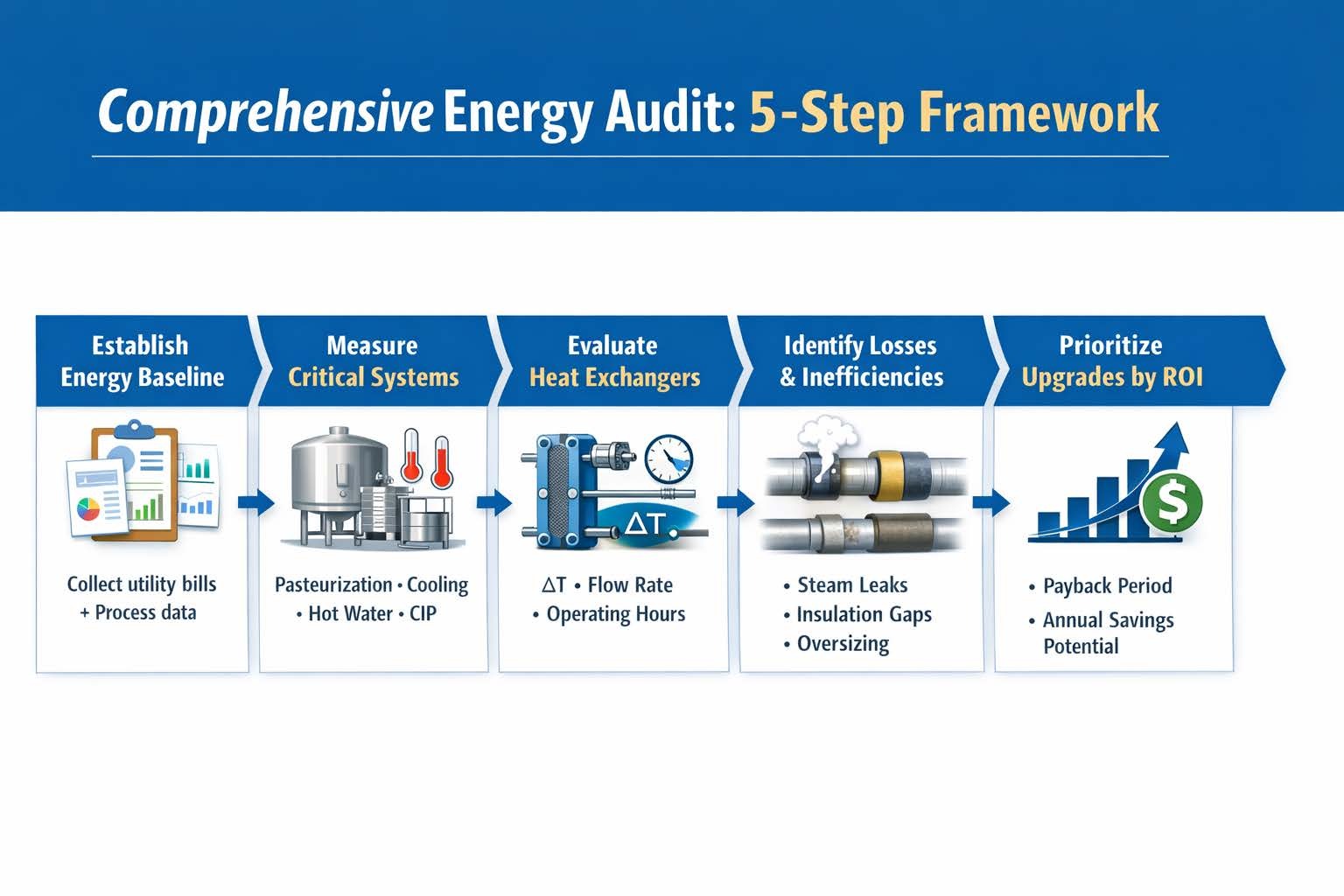
Before investing in new equipment or operational changes, dairy facilities should establish a clear baseline of current energy use. An energy audit systematically examines a facility's energy consumption to pinpoint areas of waste and identify cost-effective improvement opportunities. In dairy environments, where heating, cooling, and cleaning cycles run continuously, even small inefficiencies compound into high annual costs.
Start by collecting detailed data on energy consumption across key process areas, including milk pasteurization, product heating, cooling loops, hot water generation, and cleaning-in-place systems.
Document the energy input and output for each heat exchanger, noting temperature differentials, flow rates, and operating hours. This baseline reveals where heat is being lost, where systems are oversized or underutilized, and which equipment would benefit most from upgrades or adjustments.
A structured audit checklist helps ensure nothing is overlooked. Key tasks include measuring process heat loads, identifying system losses through insulation gaps or steam leaks, assessing control system performance, and reviewing maintenance logs for recurring issues. Recording this information creates a roadmap for prioritizing improvements based on potential savings and payback period.
Real-world results show how effective this approach can be. For example, an energy audit at a New York dairy farm identified targeted system upgrades that cut annual energy costs by about $8,000 and delivered full payback in less than seven years. Larger facilities can expect proportional savings, making the audit a smart first step toward reducing operational costs and improving overall system efficiency.
Select High-Efficiency Dairy Heat Exchangers
Choosing the right heat exchanger design directly impacts both energy performance and long-term operating costs. High-efficiency heat exchangers for dairy applications are engineered to maximize heat transfer between fluids without mixing them.
These systems recover waste heat from hot process streams and transfer it to incoming cold fluids, minimizing the need for additional utility usage.
Custom heat exchangers designed for dairy processing can save up to 40% in energy costs and reduce CO2 emissions compared to older or generic equipment. The key lies in selecting a design that matches the specific thermal loads, product characteristics, and sanitation requirements of each application.
| Heat Exchanger Type | Best For | Key Advantages | Typical Efficiency |
| Plate | Pasteurization, clean low viscosity fluids | High heat transfer coefficient, compact footprint, easy cleaning | ~5,000 W/m²K when clean |
| Tubular | High-viscosity products, particle-laden fluids | Handles fouling well, robust construction | Moderate, varies by design |
| Shell & Tube | Large-scale heating/cooling, steam applications | Proven reliability, high pressure capability | Lower than plate, ~500-1,500 W/m²K |
A typical stainless steel plate heat exchanger in dairy applications achieves a heat transfer coefficient of around 5,000 W/m²K when clean, making it highly effective for pasteurization and regeneration sections. This performance advantage translates directly into smaller equipment footprints and lower utility consumption.
When evaluating suppliers, prioritize those with a proven hygienic design experience, certified 3-A or EHEDG materials, and comprehensive OEM support. Central States Industrial (CSI) delivers fully integrated, custom-engineered sanitary heat exchanger solutions backed by OEM-trained expertise and turnkey service from initial engineering through ongoing preventive maintenance.
Integrate Advanced Control and Monitoring Systems
Modern automation and data analytics unlock substantial performance gains by enabling proactive management of heat exchanger systems. Advanced monitoring systems utilize sensors and data analytics to continuously track equipment status, providing real-time alerts and predictive maintenance insights that minimize waste and prevent costly unplanned downtime.
Technologies that drive these improvements include:
- Real-time fouling sensors monitor temperature, pressure, and flow rate based on variation in that data, and estimate fouling rate by the associated energy/pressure loss impacts.
- IoT-enabled controllers that adjust flow rates and temperatures based on current demand
- Machine learning algorithms that predict maintenance needs before failures occur
- Digital dashboards that visualize performance trends and energy consumption
Real-time fouling sensors in dairy heat exchangers enable condition-based cleaning, reducing the energy wasted on unnecessary cleaning cycles while preventing the performance losses associated with excessive buildup. Research shows that integrating IoT and machine learning with computational fluid dynamics improves real-time monitoring and predictive maintenance, allowing operations to shift from reactive repairs to planned interventions.
These control systems also support optimized scheduling of production runs and cleaning cycles, reducing downtime and providing reportable performance data for energy audits and sustainability reporting. The investment in monitoring infrastructure typically pays for itself through reduced chemical use, lower utility costs, and extended equipment life.
Maintain and Clean Heat Exchangers Regularly
Even the most efficient heat exchanger loses performance as fouling accumulates on its heat-transfer surfaces. Preventive maintenance—scheduled tasks and inspections designed to prevent equipment degradation and inefficiency—is essential for sustaining peak performance and avoiding unnecessary energy costs.
Fouling represents a major challenge in dairy processing. Cleaning-in-place systems for dairy evaporators and dryers can consume 10–26% of total processing energy costs, making cleaning efficiency critical. However, monitoring fouling in plate heat exchangers helps identify hotspots and optimize cleaning schedules, ensuring CIP cycles run only when needed rather than on arbitrary timelines.
A systematic maintenance approach should include:
- Schedule CIP cycles based on fouling sensors rather than fixed intervals, reducing chemical and water use while maintaining thermal performance
- Inspect gaskets and seals during planned downtime to catch leaks before they compromise product quality or energy efficiency
- Lubricate mechanical components such as pumps and valves to maintain optimal flow rates and minimize parasitic energy losses
- Track maintenance activities with digital logs that correlate cleaning frequency, fouling patterns, and energy consumption
This data-driven approach extends the life of heat exchangers, minimizes unplanned shutdowns, and maintains the energy savings that justified the original equipment investment. Operations that implement structured preventive maintenance programs consistently report lower total cost of ownership and higher equipment availability.
Optimize Operational Parameters for Energy Savings
Fine-tuning equipment and process settings delivers both immediate and ongoing efficiency gains. Operational optimization involves adjusting flow rates, temperatures, and cleaning intervals to meet current demands with minimal resource use, ensuring systems run at peak efficiency under varying conditions.
Statistical methods can determine optimal operating conditions for dairy heat exchangers, reducing waste and energy use by aligning equipment performance with actual process requirements. For example, doubling product flow in dairy processing requires doubling heat exchanger size if service media flow rates also double, highlighting the importance of right-sizing equipment and operating parameters.
Consider a typical milk heating application where the product enters at 4°C and must reach 34°C using hot water at 50°C. Monitoring both inlet and outlet temperatures on the product and service sides reveals the actual heat transfer occurring and identifies opportunities to reduce hot water temperature, increase regeneration, or adjust flow rates.
Digital dashboards and data analysis tools make this optimization practical:
- Monitor milk inlet/outlet temperatures continuously to detect performance drift
- Adjust pump speeds and flow rates in response to daily or seasonal demand changes
- Track key performance indicators including heat transfer rates, temperature differentials, and specific energy use per unit of product processed
By treating operational parameters as dynamic variables rather than fixed setpoints, dairy processors can capture energy savings that would otherwise go unnoticed. This approach complements equipment upgrades and maintenance programs, maximizing return on investment across the entire heat exchanger system.
Implement Low-Cost Enhancements to Supplement Efficiency
Not all energy savings require major capital investment. Simple, low-cost improvements deliver incremental reductions in utility consumption and often pay for themselves within months. These enhancements work alongside larger efficiency projects to maximize overall savings.
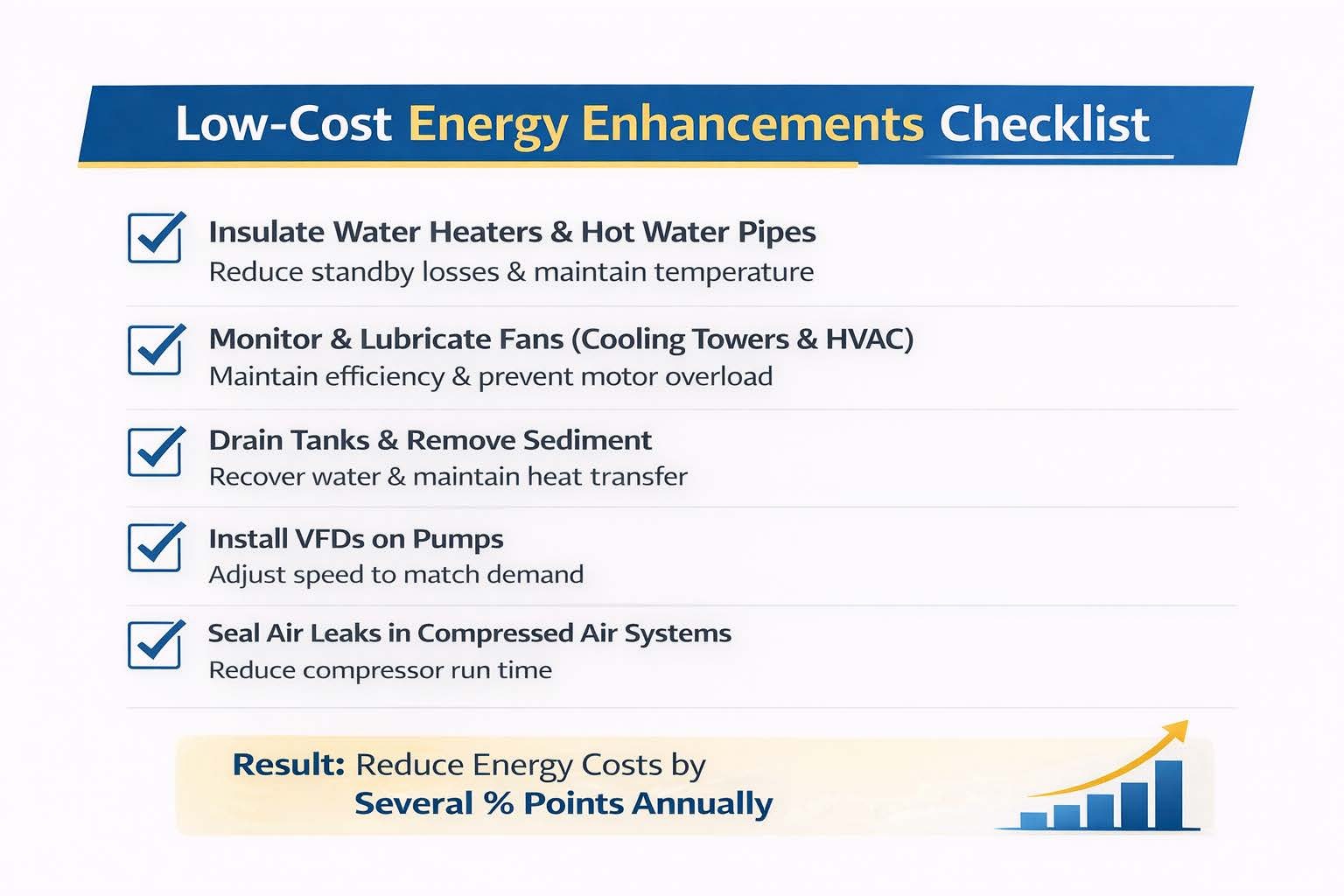
Practical steps that dairy facilities can implement immediately include:
- Insulate water heaters and hot water pipes to reduce standby losses and maintain temperature during distribution, cutting energy use without affecting process performance
- Monitor and lubricate fans in cooling towers and air handling systems to maintain peak efficiency and prevent motor overload
- Drain remaining water from tanks for general use, such as livestock watering or cleaning, and schedule regular sediment removal to maintain heat transfer in storage vessels
- Install variable frequency drives on pumps serving heat exchangers to match flow rates to actual demand rather than running at full speed continuously
- Seal air leaks in compressed air systems that serve pneumatic valves and controls, reducing compressor run time
A simple checklist of these items helps operations teams systematically address opportunities during routine walkthroughs. While each improvement may seem minor individually, the cumulative effect can reduce facility energy consumption by several percentage points annually—savings that continue year after year with minimal ongoing effort.
FAQs
Ready to Identify Your Facility’s Energy Savings Opportunities?
Talk with our thermal systems specialists to evaluate your heat exchangers, CIP systems, and utility performance.
Contact Us to Schedule ServiceABOUT CSI
Central States Industrial Equipment (CSI) is a leader in distribution of hygienic pipe, valves, fittings, pumps, heat exchangers, and MRO supplies for hygienic industrial processors, with four distribution facilities across the U.S. CSI also provides detail design and execution for hygienic process systems in the food, dairy, beverage, pharmaceutical, biotechnology, and personal care industries. Specializing in process piping, system start-ups, and cleaning systems, CSI leverages technology, intellectual property, and industry expertise to deliver solutions to processing problems. More information can be found at www.csidesigns.com.