
Custom vs OEM Pharmaceutical Equipment
Our Custom Solutions Deliver
In pharmaceutical manufacturing, precision, compliance, and process integrity are non-negotiable. When it comes to equipment, companies often face a crucial choice: standardized OEM systems or purpose-built custom solutions. This article breaks down that comparison and shows why CSI’s custom-engineered pharmaceutical systems consistently deliver more, while:
- Exploring the key differences between OEM and custom pharmaceutical equipment
- Debunking common myths
- Explaining why custom solutions are often the better choice for specialized processes
- Considering the total cost of ownership
- Ensuring validation readiness
- Future-proofing of your production line
OEM vs Custom Equipment – What's the Difference?
Before diving into the benefits of custom pharmaceutical equipment, it's essential to understand the fundamental difference between OEM and custom-built solutions. OEM equipment is built to sell; custom equipment is built to solve.
OEM Equipment
OEM (Original Equipment Manufacturer) equipment is typically pre-designed and mass-produced to meet broad performance criteria. These systems are configured around standard parameters like flow rate, pressure, and capacity, and they're built to perform well within a defined operating envelope.
In an OEM scenario, the burden often falls on the customer to adapt their process to fit the equipment. If a process falls between two standard model configurations, the manufacturer has limited options: oversize and overpay, or undersize and risk poor performance.
Custom Equipment
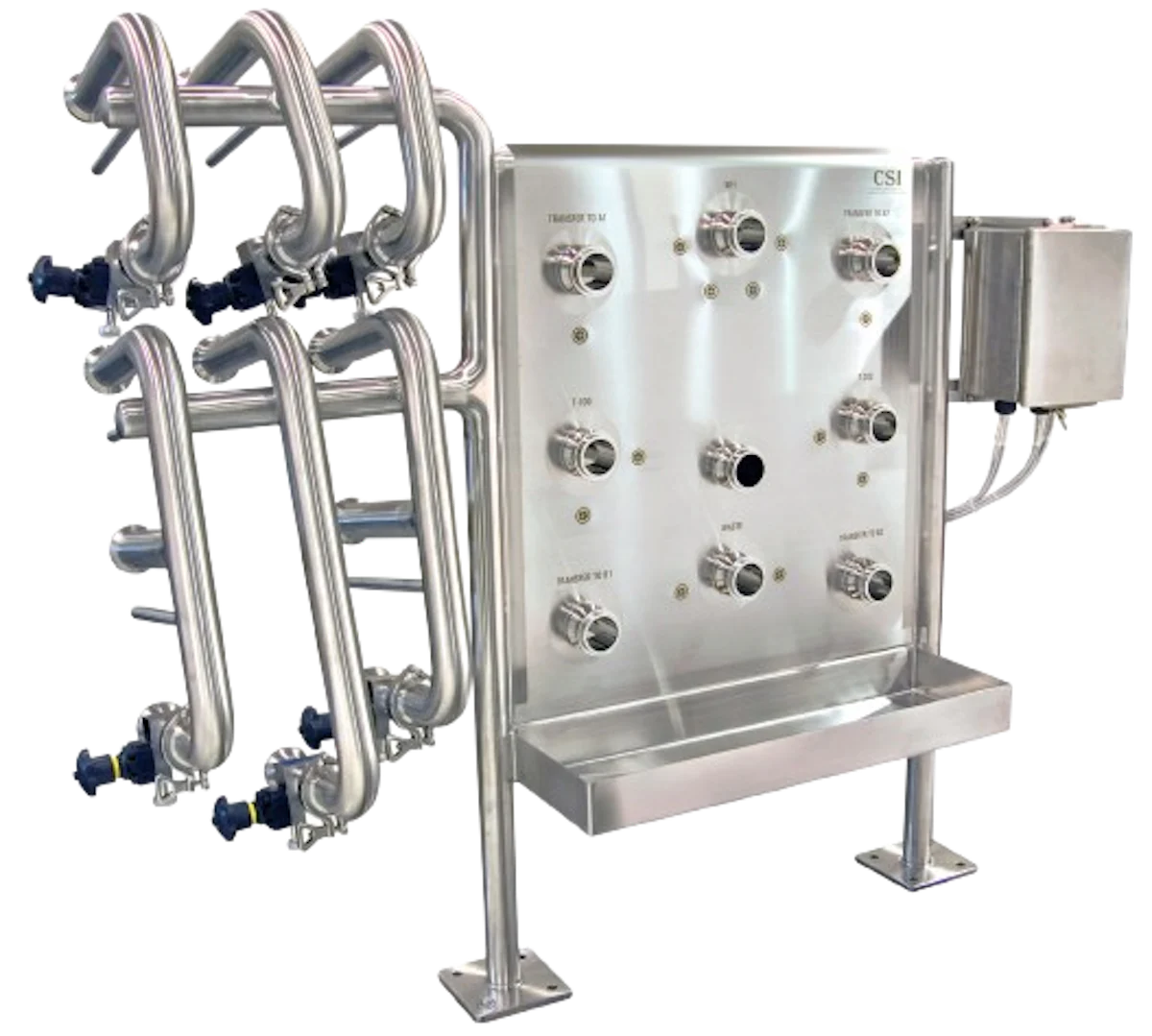
Custom equipment—like what CSI designs and fabricates—is built around your process: understanding the application, the production goals, and regulatory or space constraints. Then, a system is designed from the ground up using standard, validated components configured to meet your operational needs precisely.
Instead of being boxed into fixed options, custom equipment offers process-specific design and layout, flexibility for expansion, purpose-built control strategies, safety features, and seamless integration with upstream/downstream systems.
Challenges in Sourcing Pharmaceutical Equipment
Sourcing equipment for pharmaceutical manufacturing isn't just about buying machinery — it's about solving complex processes, compliance, and operational challenges. When equipment must meet high-purity standards and precise performance requirements, the sourcing decision becomes far more strategic. For CSI, a custom solution provider, these challenges fall into four key areas:
Innovation: Applying Deep Industry Knowledge
Pharmaceutical processes demand innovation grounded in real-world expertise. Whether designing for cleanability, sterility, or traceability, the supplier must deeply understand current industry standards like ASME BPE and regulatory expectations from the FDA or EMA. Innovative equipment isn't about flashy features—it's about using proven engineering knowledge to solve specific challenges smarter and more efficiently.
Design: Combining Process and Mechanical Engineering
Good equipment starts with great design. For custom pharmaceutical systems, that means process design (how the system will function chemically or biologically) and mechanical design (how it will be fabricated, assembled, and cleaned). A strong design ensures repeatable performance, efficient clean-in-place (CIP) integration, material and surface finish compatibility, and space-conscious layout.
Execution: Can They Build What They Design?
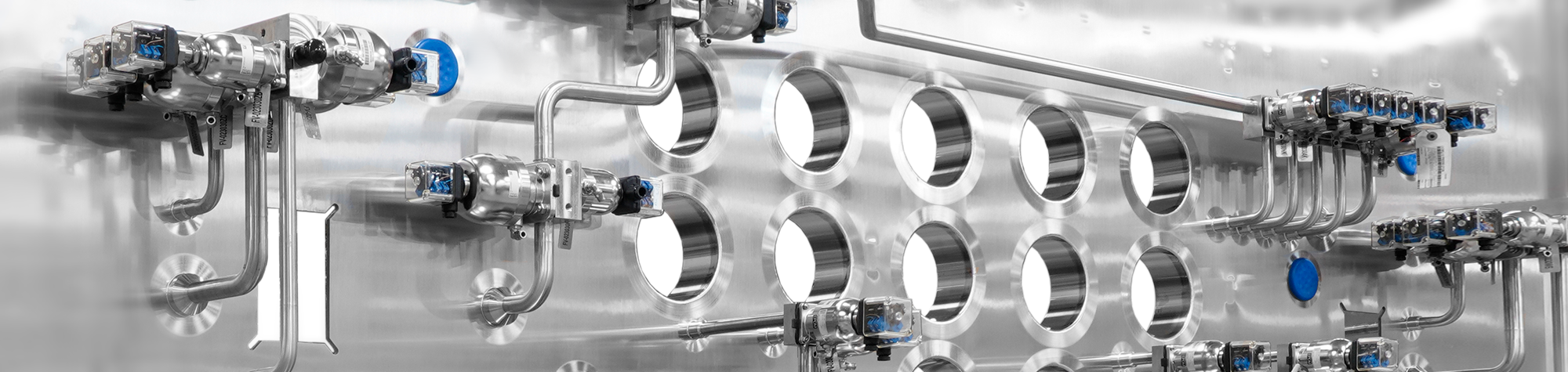
Having a good design is one thing—executing it is another. CSI's advantage is that we're not just designers; we fabricate the solutions in-house. We have the tools, people, and capacity to turn complex pharmaceutical designs into reality, including: precision welding and orbital tube fabrication, sanitary polishing and finishing, and testing and documentation for validation readiness. The entire project is at risk if a supplier can't reliably fabricate their design.
Integrity: Documentation, Quality, and Validation
In pharmaceutical manufacturing, what you build is only as good as the documentation that proves it. This includes material traceability, weld logs and surface finish certificates, component manuals and datasheets, and full IQ/OQ/PQ validation support. For CSI, integrity also means delivering precisely what was promised — and doing so with the transparency and quality assurance expected in a regulated environment.
Misconceptions About Custom Equipment
Despite the growing demand for tailored process solutions, many decision-makers still hesitate to choose custom-built pharmaceutical equipment. That hesitation often stems from a few persistent myths, most of which don't hold up under scrutiny.
Here are the most common misconceptions about custom solutions and the reality behind them:
Custom Equipment Is Always More Expensive
Custom doesn’t automatically mean higher cost. In fact, a well-engineered custom solution often reduces total cost of ownership because it’s built specifically for your process. That means no overdesign, no unnecessary features, and no compromises. With OEM systems, you may end up paying for extra capacity or capabilities you don’t actually need just to meet standard performance thresholds.
OEM Equipment Is Faster to Deliver
OEM systems are frequently believed to have a shorter lead time than than custom systems. In reality, many OEM models still require assembly and some level of customization, putting their lead times in the same range as that of custom fabricators like CSI. For the types of processing skids and systems CSI builds, lead times are competitive with OEMs, especially when factoring in design changes or validation requirements that slow down standard deliveries.
Custom Systems Are Too Complicated to Maintain
A well-designed custom system shouldn't be complex — it should be intuitive. CSI builds custom systems using standard, industry-recognized components, carefully arranged for maintainability and serviceability. We provide full part numbers, spare parts recommendations, and individual manuals and datasheets for every component. The result? A system that's easy to support and fully transparent — not a black box.
OEM Systems Are Safer or More Reliable
Standardization doesn’t always mean safety. OEM systems are built to generic specs, which may not include your specific safety interlocks, alarms, or procedures. A custom system integrates these directly into the design—improving operator safety, minimizing downtime, and avoiding costly failures. While the best solution depends on your process, custom equipment often offers better flexibility, traceability, and performance.
The Regulatory Advantage: Staying Ahead with ASME BPE
In pharmaceutical manufacturing, compliance isn't optional — it's the baseline. One of the most critical standards in hygienic equipment design is ASME BPE (BioProcessing Equipment), which outlines requirements for materials, surface finishes, fabrication, and documentation in high-purity environments.
Many equipment buyers don't realize that ASME BPE updates every two years, introducing new or refined requirements to address evolving industry needs. Each time a new edition is published, manufacturers have six months to comply with the updated standard for any new equipment introduced.
Custom Equipment Keeps You Current
While OEM systems may be built to previous specs or rigid templates, custom solutions from CSI are designed to meet the latest ASME BPE guidelines by default.
That means:
- You don't have to retrofit or modify equipment after purchase.
- You avoid costly delays during validation or qualification.
- You gain peace of mind knowing your equipment is built for the future, not just now.
Validation-Ready Documentation
Compliance isn't just about design — it's about proving it. Every custom system CSI fabricates includes complete documentation to support:
- IQ (Installation Qualification)
- OQ (Operational Qualification)
- PQ (Performance Qualification)
We provide:
- Material test reports (MTRs)
- Weld logs and surface finish documentation
- Component manuals and datasheets
- Calibration records (where applicable)
This level of traceability simplifies validation and regulatory audits — and it's standard practice for every CSI project.
In a regulated environment where standards evolve, and documentation is crucial, a custom solution gives you confidence that your equipment will not only work but also pass inspection.

Safety & Process Customization
In pharmaceutical manufacturing, no two production lines are the same, and safety protocols are just as unique. That’s where custom solutions stand apart from standardized OEM systems.
OEM equipment is built for general use, meaning it often lacks specific features required for your operation’s safety, compliance, or process flow. If a feature like an emergency shutoff, alarm, or interlock isn’t built into the OEM design, it usually can’t be added easily, or at all.
Custom Solutions Enable Custom Safeguards
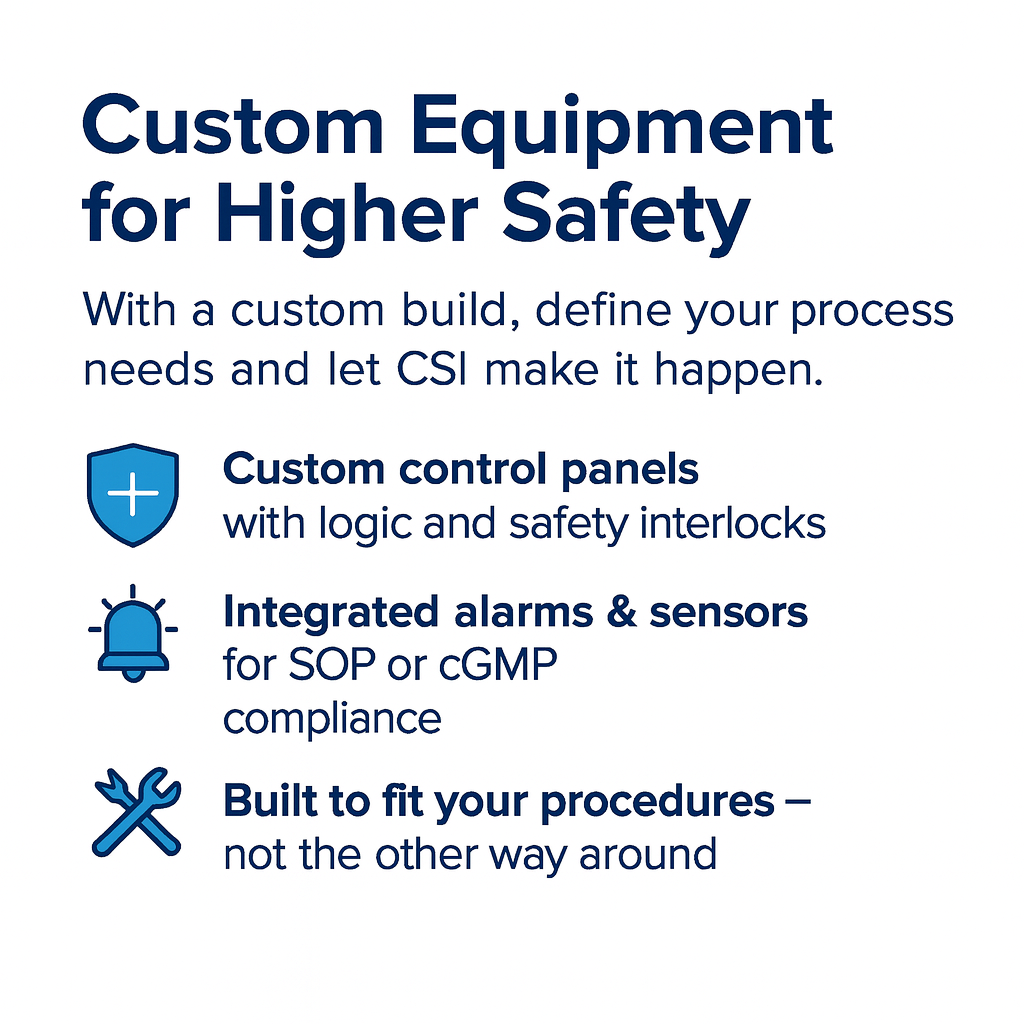
With a custom build, you can define what your process needs, and CSI can make it happen. For example:
- Store panels can be configured with process-specific operational logic and safety interlocks.
- Additional alarms, status lights, or flow switches can be integrated to meet SOP or cGMP requirements.
- Equipment can be designed with maintenance-friendly layouts or unique access points, reducing the risk of issues during servicing.
If your team has unique operating procedures, a custom system can be built to enforce or support them, rather than working around them.
Reducing Risk Through Design
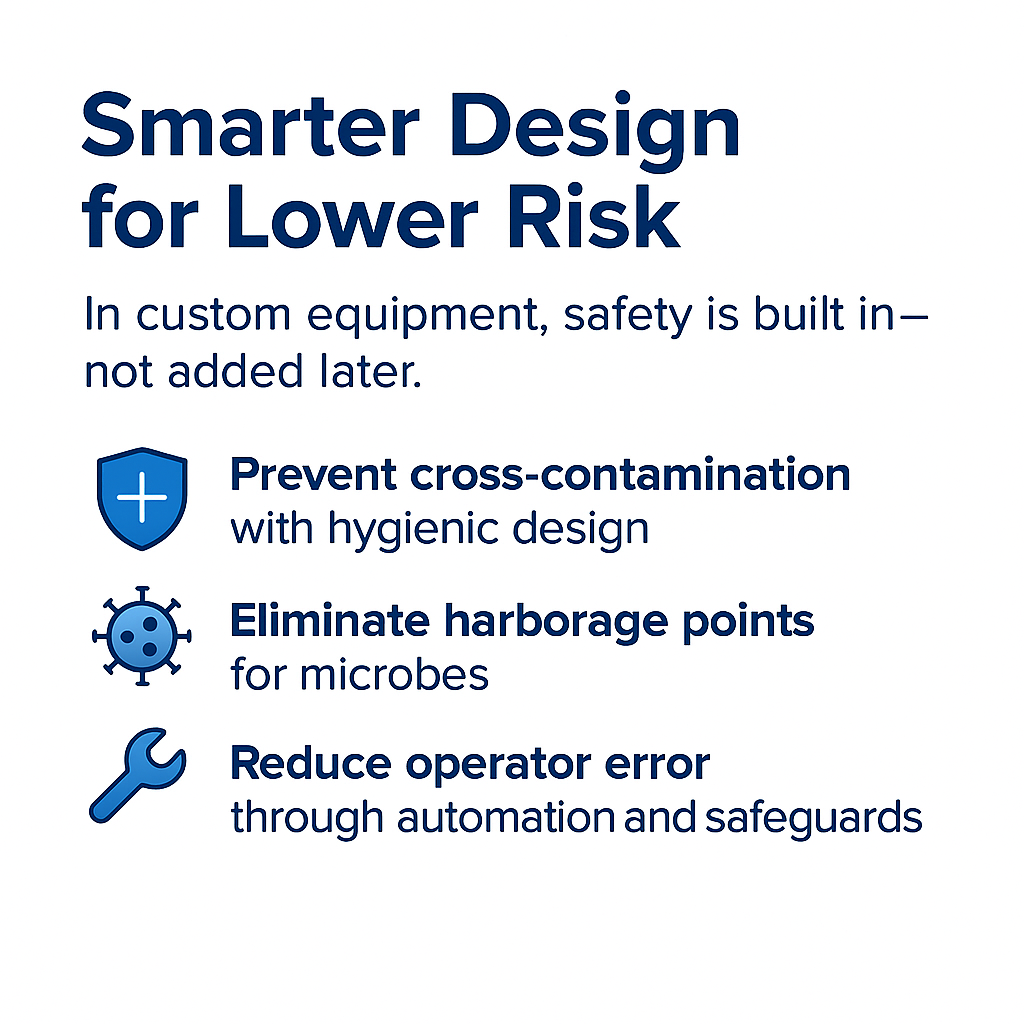
Designing for safety isn't an afterthought in custom equipment — it’s a core function. Whether you're minimizing manual intervention, automating cleaning sequences, or ensuring complete drainability, a custom system can be built to:
- Prevent cross-contamination
- Eliminate microbial harborage points.
- Reduce operator error or exposure.
That’s not just safer — it’s a more innovative business. With custom solutions, you're not compromising your process to fit the equipment — you're designing equipment that supports your process, your safety, and your long-term goals.
When Custom Is the Right Choice
Custom pharmaceutical equipment isn't always necessary, but when it is, the difference can be transformational. If your operation involves specialized processes, stringent regulatory oversight, or rapidly evolving production needs, a standard OEM system may not be sufficient.
Here’s when a custom solution is likely the better fit:
1. You Have a Unique Process
No two pharmaceutical recipes are identical, and the same goes for their process requirements. Whether it’s viscosity, CIP sequencing, thermal sensitivity, or batch size variability, custom systems enable precise control over process-critical parameters that OEMs may not be able to accommodate.
2. You Need Process Flexibility or Expansion Potential
OEM models are designed to meet specific, fixed criteria. If you anticipate changes, such as increased capacity, new product lines, or modular expansion, a custom solution can be designed with future-proofing in mind, helping you scale without needing to reengineer everything.
3. You Require Strict Safety or Validation Standards
If your operation mandates specific interlocks, alarm conditions, or validation checkpoints, OEM systems may fall short. Custom systems can embed these safeguards into the base design, making validation more straightforward and safety more consistent.
4. Documentation, Compliance, and Traceability Matter
In high-stakes pharmaceutical production, the system isn’t complete until the documentation is. Custom solutions from CSI come fully equipped with:
Complete material traceability
- Component manuals and datasheets
- Validation-ready IQ/OQ/PQ support
This ensures a smoother path to regulatory approval and reduces the likelihood of headaches during audits.
5. You Want One Partner from Design to Delivery
With CSI’s custom solutions, you’re not dealing with multiple vendors or piecemeal integration. We handle:
- Design
- Fabrication
- Assembly
- Testing
- Documentation
That means fewer handoffs, better communication, and tighter quality control throughout the entire process.
When precision, performance, and process compliance are essential, a custom system doesn’t just solve problems — it prevents them.
Custom Equipment is the Better Choice
In pharmaceutical processing, there’s no room for compromise — and that includes your equipment. While OEM systems may offer speed or convenience, they often fall short in adapting to your unique process, meeting rigorous compliance needs, or scaling to meet future demands.
Custom equipment, on the other hand, offers a tailored solution that aligns with your operational goals from day one. With the right partner, you get more than a fabricated system — you get innovation, precision engineering, execution expertise, and complete documentation support.
At CSI, we specialize in pharmaceutical-grade custom process systems that meet the highest hygienic standards and validation requirements. Whether you're tackling a new formulation, expanding production, or upgrading outdated equipment, we design around your needs, not the other way around.
Ready to build a better process?
Contact CSI to discuss your custom pharmaceutical equipment needs, and let’s create a solution tailored to your specific process.
Contact Us for a QuoteABOUT CSI
Central States Industrial Equipment (CSI) is a leader in distribution of hygienic pipe, valves, fittings, pumps, heat exchangers, and MRO supplies for hygienic industrial processors, with four distribution facilities across the U.S. CSI also provides detail design and execution for hygienic process systems in the food, dairy, beverage, pharmaceutical, biotechnology, and personal care industries. Specializing in process piping, system start-ups, and cleaning systems, CSI leverages technology, intellectual property, and industry expertise to deliver solutions to processing problems. More information can be found at www.csidesigns.com.