
CSI Factory Acceptance Test (FAT) Process & Steps
Factory Acceptance Testing (FAT) is an optional step performed after design and fabrication to verify that the equipment meets design specifications and operates properly. Customers might choose to conduct an FAT to ensure the design, fabrication, equipment, components, and controls function as required and expected. Testing performed at the factory has several advantages, especially the ability to identify problems before the equipment leaves the factory.
Testing lets your team identify discrepancies and design improvements, and make improvements prior to shipping. Conducting FAT is a valuable opportunity that should not be overlooked. Skipping FAT and discovering problems after equipment is shipped and installed can result in schedule delays, validation issues, or shutdowns. In some cases, responsibility for malfunctions can become contentious, so finding and addressing them before equipment leaves the manufacturer is not only wise but also a much more cost-effective approach than discovering them after installation. Changes or corrections can be completed at a fraction of the time and cost of on-site work. Documentation is also provided in a cleaner and more consistent form, with work performed before it is shipped.
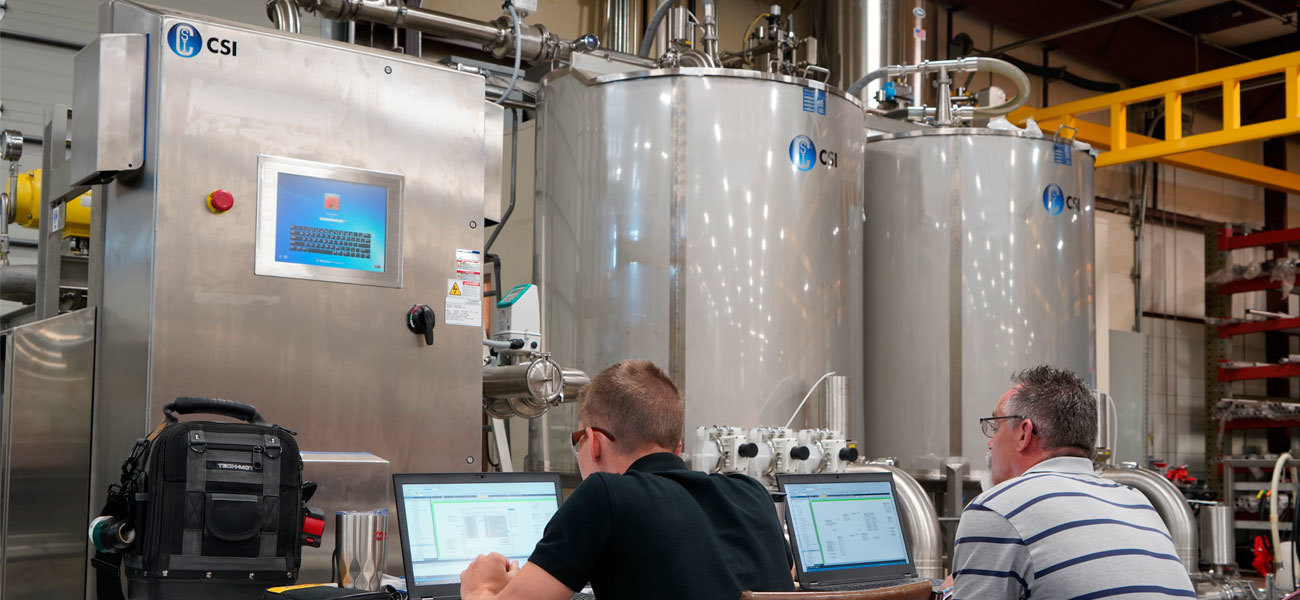
Benefits of a Factory Acceptance Test
- Verify tie-in connection points are where they are supposed to be
- Check accessibility for operation and maintenance
- Check electrical connections
- Verify equipment-related documentation
- Verify equipment against project-related drawings and specifications
- Receive hands-on training
- Meet the design, engineering, and fabrication team in person
Basics of a Factory Acceptance Test
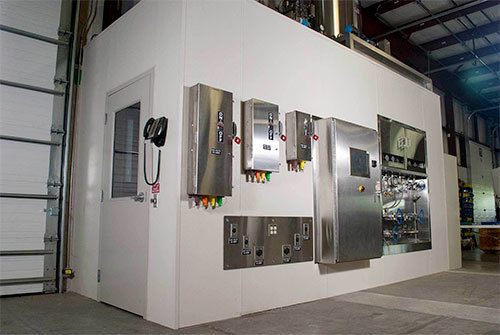
Given the value of factory acceptance testing, choosing a manufacturer who offers FAT is an important first step in the design/build process.
The fundamental process of a FAT execution includes, connecting skid to utilities for preform functional operations, compare assembly to as build drawings, and verify construction to the applicable standards such as ASME-BPE, 3-A Sanitary, or other customer specifications.
Testing gives operators and maintenance personnel valuable information about system readiness before the processing equipment leaves the fabrication center.
CSI can provide an FAT checklist and/or protocol for customer use during FAT. A basic FAT provides verification of important components and functions. FAT functions can be tailored to customer needs and equipment requirements. Common activities include:
Identification
- Skid Identification Verified (CSI Equipment Tag)
- Components Tagged per P&ID
- Connections Verified (Type, Size, and Location)
- Control Panels Verified (Location, Square, and Plumb)
- ASME BPVC Identification Verified (Tag and Stamp)
- Customer-Defined Markings Verified
- Major Equipment Verified (Location, Square, and Plumb)
- Drain Connections Verified (Type, Size, and Location)
Structural Frame & Assembly Dimensionals
- Frame Workmanship Verified (Square and Plumb)
- Connections Verified (Type, Size, and Location)
- Control Panels Verified (Location, Square, and Plumb)
- Overall Length, Width, and Height Verified
- Visual Inspection of Structural Welds
- Major Equipment Verified (Location, Square, and Plumb)
- Drain Connections Verified (Type, Size, and Location)
- Mounting Plate Locations and Hole Patterns Verified
Vessel or Major Equipment
- Vessel Data Sheet and Drawings Reviewed
- External Visual Inspection Completed
- Materials of Construction Verified
- Equipment Data Sheet and Drawings Reviewed
- Pressure Equipment Certification (ASME Stamp) Verified
- Supplier Documentation Package Reviewed
Processes Piping
- Pressure Testing Completed
- Piping Supports Verified
- Piping Reviewed per P&ID
- Piping Drainability (Slope) Verified
- Configuration Verified per Drawings and Specifications
- Valve Orientation Verified per Drawings
Materials and Finishes
- Piping Finishes per Line Classifications or Applicable Standards
- Equipment and Component Finishes per Specifications or Applicable Standards
- Piping Materials of Construction per Line Classifications or Applicable Standards
- Equipment and Component Materials of Construction per Specifications or Applicable Standards
Documentation
- Weld Documentation per ASME BPVC Section IX and ASME BPE
- Receiving Inspection Documentation, Including Material Examination Logs, Material Test Reports (MTRs), Positive Material Identification (PMI), Certificates of Conformance for Elastomers, and Surface Finish Compliance Records
- Inspector Certifications for Visual Testing (VT)
- Turnover Package per VDR Requirements
- CSI Certificate of Conformance for the Skidded System
- Weld Logs and Weld Examination Documentation per ASME BPE
- Passivation Logs and Other Process Certifications
- Installation, Operation, and Maintenance (IOM) Manuals
Who should participate in testing?
Involving all stakeholders in creating test plans for system functionality and failure conditions makes testing more valuable
Key FAT personnel are those with intimate knowledge of the system and requirements. Engineering, quality, maintenance, operators, validation, and even the installation crew can benefit from taking part in an FAT. For example, getting input on the test plan from machine operators, quality control, maintenance staff, and process engineers gives you a broader view of the testing needed.
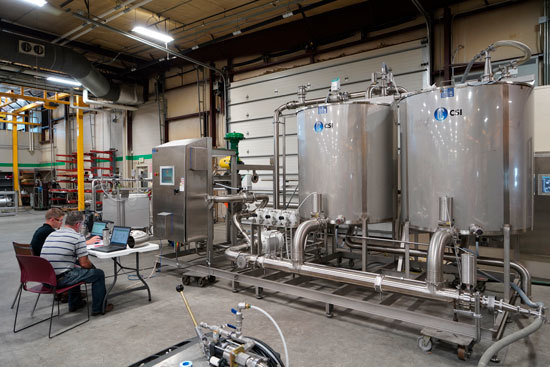
For larger-scale equipment, having two or more participants in the FAT can help with efficiency; for example, one person can review documentation while others inspect equipment or test functionality. Depending on system complexity, additional personnel can provide cross-functional perspectives on compliance, electrical, piping, welding, maintenance, pumps, valves, component accessibility, and other operational issues.
While CSI can provide personnel to assist and to answer questions, having your own experts on hand to run the tests and check the specifications that matter most.
FAT gives operators the opportunity to functionally test a piece of equipment before it leaves the shop, allowing everyone to discuss questions and modifications. Modifications can be made at a lower cost and in less time when identified during FAT and when the equipment is still in the manufacturing facility.
The FAT can cover a variety of testing and/or inspection points based on specific requirements, unique equipment specifications, and the type and size of equipment. FAT testing can be utilized for panels, skid systems, clean-in-place (CIP) systems, and other custom fabrications.
Testing may be basic, such as testing proximity switch functionality, or may include more thorough testing, such as pump performance testing.
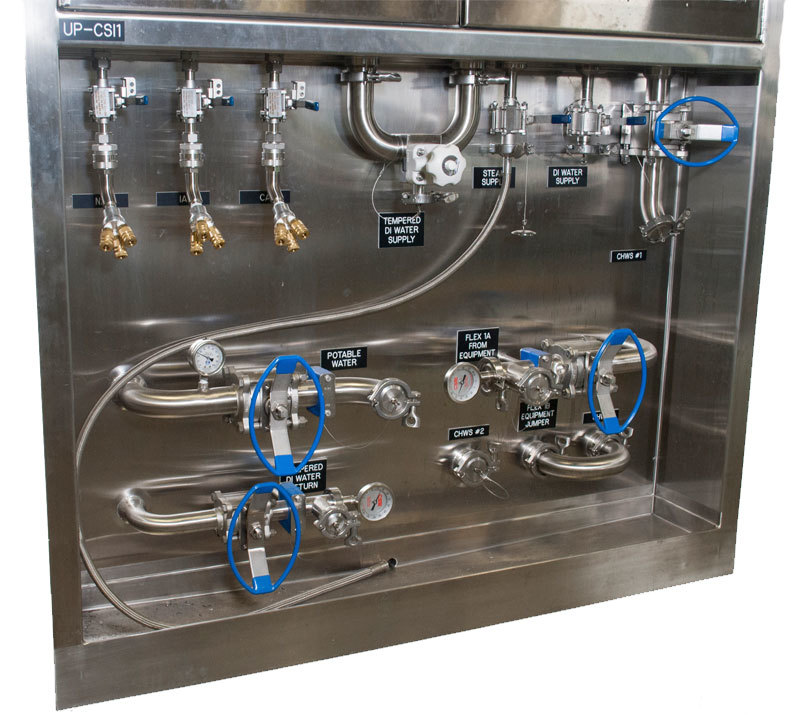
FAT schedule
A well-planned FAT can include a range of functional and documentation verifications to ensure the equipment meets all requirements.
- Wet Testing: can simulate system operation and functionality
- Pneumatic and Electrical Testing: ensure that components (i.e., proximity switches, valve actuators) function as expected after installation.
- P&ID (Piping and Instrumentation Diagram) Walk-down: verify piping flow paths, component tags, and tie-in connections. Ensuring that the installation will go smoothly.
- Inspection: verifies fabrication against data sheets, user manuals, and other relevant documentation
To ensure a productive FAT, you should outline a list of critical aspects to be verified and allow enough time for reviewing any associated punch list.
As you make your schedule and plan, consider these questions:
- What processing functions do you want to test?
- Is there any major equipment to be verified?
- Size and footprint dimensions?
- Connection size and locations?
- Materials and finishes?
- Software testing? Describe what you want to test: interlocks, alarms, setpoints, and so on.
- What are your documentation requirements?
- Personnel list? (People who know system requirements, operational needs, maintenance, and accessibility requirements, and know how to verify performance standards).
Scalable testing
Some skids designed for food, dairy, and beverage plants include software that automates performance and reporting. Software testing, from pre-wash to final rinse, ensures the system is configured to reach predetermined setpoints for flow, temperature, and chemical concentration.
In the case of CIP 2.0, FAT gives operators hands-on experience with its software interface and usability, onboard user manuals, cleaning verification functions, cloud connectivity, safety alerts, and predictive maintenance.
During software testing, users run through scenarios to ensure hardware and software perform according to specifications.
CSI FAT Process Steps
- Thorough HMI (Operator Interface) Review – Verify buttons and sequencing. Review all screens to understand how to navigate and run the equipment.
- Functional Testing – Check components and instrumentation to confirm setpoints and limits.
- Performance Testing – Run mechanical verifications and cross-reference with P&IDs and electrical drawings.
- Review Alarms and Messages – Execute alarms and review messages on the HMI.
- Mechanical Verification – Verify surface finishes, piping slopes, BOM, component tagging, and dimensional verification.
Next Steps
Don’t overlook factory acceptance tests. Taking advantage of the opportunities available at FAT can resolve problems that would add more time and cost if performed in the field, where shutdowns and delays are expensive and time-consuming.
ROI and FAT
When weighed against the possibility of installation obstacles or processing shutdowns, testing always pays off in hands-on experience with equipment, valuable learning from expert fabrication partners, and documentation verification.
Designed to be among the best in the industry, CSI’s FAT capacity includes up to 200 amp/480 - 3 phase electrical power, DI water, City, City water, hot and cold water, compressed air, compressed nitrogen and more possible utilities to the FAT area.
Let us know how we can assist you in planning, scheduling, and arranging your FAT. We can help with finding places to stay, eat, shop, and/or being entertained. To learn more about Factory Acceptance Testing with CSI, contact us today!
ABOUT CSI
Central States Industrial Equipment (CSI) is a leader in distribution of hygienic pipe, valves, fittings, pumps, heat exchangers, and MRO supplies for hygienic industrial processors, with four distribution facilities across the U.S. CSI also provides detail design and execution for hygienic process systems in the food, dairy, beverage, pharmaceutical, biotechnology, and personal care industries. Specializing in process piping, system start-ups, and cleaning systems, CSI leverages technology, intellectual property, and industry expertise to deliver solutions to processing problems. More information can be found at www.csidesigns.com.
CSI FAT Process FAQs
ABOUT CSI
Central States Industrial Equipment (CSI) is a leader in distribution of hygienic pipe, valves, fittings, pumps, heat exchangers, and MRO supplies for hygienic industrial processors, with four distribution facilities across the U.S. CSI also provides detail design and execution for hygienic process systems in the food, dairy, beverage, pharmaceutical, biotechnology, and personal care industries. Specializing in process piping, system start-ups, and cleaning systems, CSI leverages technology, intellectual property, and industry expertise to deliver solutions to processing problems. More information can be found at www.csidesigns.com.