
Heat Exchangers in Pharmaceutical Manufacturing
Essential Guide to Design, Applications, and Compliance
Precise temperature control is one of the most critical requirements in pharmaceutical manufacturing. Even minor deviations can affect product quality, safety, and compliance. At the center of this process are heat exchangers — systems that manage thermal energy in a reliable, efficient, and hygienic way.
This article explains why heat exchangers are essential in pharmaceutical production, the designs most often used, their applications across different processes, and the design requirements that ensure compliance with strict regulatory standards.
In pharmaceutical manufacturing, precision isn’t optional — it’s everything. A properly designed heat exchanger doesn’t just control temperature; it safeguards product integrity, patient safety, and regulatory compliance at every step.
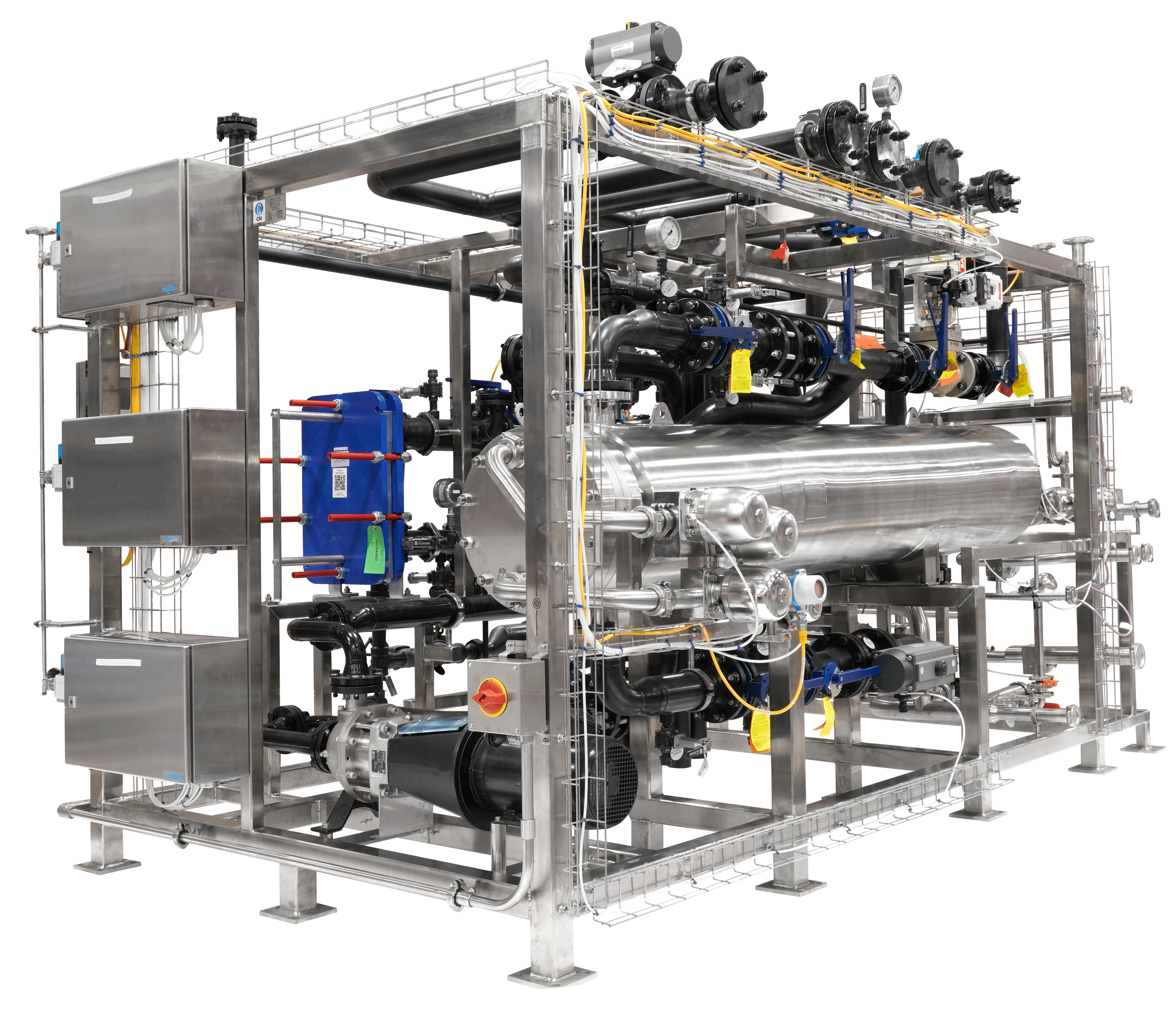
Why Heat Exchangers Are Critical in Pharma
Pharmaceutical products are highly temperature sensitive. Active pharmaceutical ingredients (APIs) often require specific crystallization conditions to achieve the correct form, which directly impacts bioavailability and therapeutic effectiveness. Similarly, fermentation in biologics production depends on narrow temperature ranges to support cell growth and product expression.
In these processes, heat exchangers regulate temperatures to maintain stability and consistency. Their performance directly supports product integrity, helps manufacturers comply with current Good Manufacturing Practices (cGMP), and reduces operational risks.
Product Safety & Contamination Prevention
Beyond temperature control, pharmaceutical heat exchangers must be designed to prevent contamination. Cross-contamination between processed fluids and utilities can have serious consequences. To reduce this risk, many systems employ double-tube sheet or welded plate designs that provide complete separation between fluids, even in the event of a leak. Microbial contamination is another concern. Smooth, polished surfaces and drainable designs minimize areas where bacteria could grow. These hygienic features, combined with compatibility for CIP (clean-in-place) and SIP (steam-in-place) procedures, ensure heat exchangers can withstand rigorous cleaning cycles without compromising performance.
Meeting FDA and cGMP Standards
Compliance with FDA regulations and global cGMP standards is non-negotiable in pharmaceutical production. Heat exchangers must be designed, installed, and documented to meet these requirements. Validation protocols — including Installation Qualification (IQ), Operational Qualification (OQ), and Performance Qualification (PQ) — confirm that systems perform reliably over time and under real production conditions. Every stage of this process requires thorough documentation. Manufacturers must provide certified materials, fabrication records, and test results, ensuring full traceability and readiness for audits or inspections.
Types of Heat Exchangers in Pharmaceutical Use
Pharmaceutical facilities rely on various types of heat exchangers, depending on the specific process requirements. Shell and tube exchangers provide durability and scale for large utility systems. Plate and frame exchangers allow fast cleaning and are ideal for applications that require frequent changeovers. We recently compared Plate and Frame to Shell and Tube heat exchangers; the Plate and Frame heat exchanger was the clear winner.
Double-tube sheet exchangers add an extra layer of safety to prevent fluid mixing, while scraped surface exchangers are suited for viscous or temperature-sensitive products. Welded plate units eliminate gaskets, making them a strong choice for sterile or high-purity applications.
Each design is selected based on the balance of efficiency, cleanability, and compliance needs in a given process.
Pharmaceutical Processing Heat Exchangers
CSI is your trusted source for hygienic pharmaceutical processing equipment.
Explore Our Heat ExchangersApplications Across Pharmaceutical Manufacturing
Heat exchangers touch nearly every stage of the production process. During API synthesis, they manage highly exothermic or endothermic reactions, as well as solvent recovery. In crystallization, they control cooling profiles that determine particle size, purity, and performance of the final API.
In biotechnology, fermentation processes rely on precise temperature control throughout growth and production phases. Heat exchangers provide stable conditions for cell activity while integrating with cleaning and sterilization cycles.
Sterilization and cleaning also depend on these systems. CIP units use controlled hot water or chemical solutions, while SIP operations rely on pure steam generation to sterilize equipment and piping. Both require heat exchangers capable of repeatable, validated performance.
Finally, water systems represent one of the most critical applications. Heat exchangers regulate purified water generation, water for injection (WFI) production, pure steam, and point-of-use cooling. Each of these applications has its own strict requirements for purity, drainability, and microbial control. Design Requirements and Materials
Pharmaceutical heat exchangers are designed to international standards (e.g. ASME-BPE, EHEDG), and typically constructed from 316L stainless steel, which offers excellent corrosion resistance and compatibility with aggressive cleaning agents. Surfaces are often electropolished to achieve a smooth finish (Ra ≤ 0.4 μm), minimizing bacterial adhesion and enabling effective sterilization.
Seamless tubing, sanitary fittings, and maximum drainability are also standard features. Together, these design elements create equipment that resists contamination, performs reliably under repeated cleaning, and meets the highest hygienic standards.
Monitoring, Safety, and Maintenance
Modern pharmaceutical heat exchangers integrate monitoring systems for temperature, pressure, and flow, ensuring real-time control and accurate batch documentation. Leak detection is crucial in double-tube sheet designs, providing early warnings of potential failures.
Preventive maintenance programs extend system life and ensure compliance with regulations. Regular inspections, combined with thorough documentation, allow facilities to catch potential issues before they cause downtime or compromise quality.

Benefits Beyond Compliance
Well-designed heat exchangers offer advantages that go beyond regulatory requirements. Efficient designs can reduce energy consumption by as much as 50%, lowering operational costs while supporting sustainability goals. Systems designed for ease of cleaning and modular scalability enhance uptime and throughput, providing facilities with greater flexibility to meet evolving production demands. Ultimately, the right heat exchanger is an investment in reliability, efficiency, and patient safety.
Safeguarding Product Integrity
Heat exchangers form the backbone of pharmaceutical thermal management. They safeguard product quality, ensure regulatory compliance, and optimize operational efficiency. By selecting the right design and collaborating with an experienced supplier, pharmaceutical manufacturers can enhance both product integrity and long-term performance.
Hygienic Heat Exchangers Sales and Service
CSI is a trusted partner for servicing heat exchanger systems in the biopharmaceutical industry. CSI helps processors maintain peak system reliability and operational efficiency through system design and engineering, pharmaceutical skid fabrication, preventative maintenance, and more.
Contact Us for a QuoteABOUT CSI
Central States Industrial Equipment (CSI) is a leader in distribution of hygienic pipe, valves, fittings, pumps, heat exchangers, and MRO supplies for hygienic industrial processors, with four distribution facilities across the U.S. CSI also provides detail design and execution for hygienic process systems in the food, dairy, beverage, pharmaceutical, biotechnology, and personal care industries. Specializing in process piping, system start-ups, and cleaning systems, CSI leverages technology, intellectual property, and industry expertise to deliver solutions to processing problems. More information can be found at www.csidesigns.com.